
|
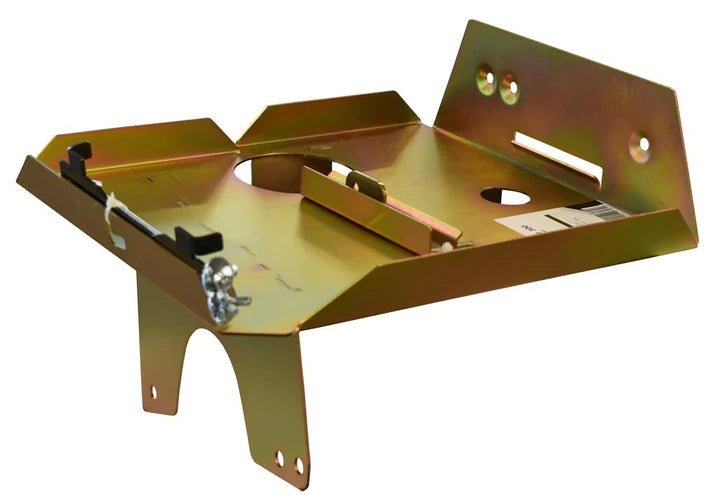
The Cradle > The
Battery
|
The Isolator -- The
Ultimate Battery Isolator |
| Each system has its benefits but, in a nutshell, manual/solenoid
Isolators parallel the batteries for charge & discharge if required.
No other system has this feature. It has its down side as paralleling
shortens battery life and increases recovery time, but it can be great
for some winching applications. Note: solenoids, manual switches create
voltage spike, thus they are NOT recommended on EFI systems |
| |
|
The Diode Isolator
|
|
Diode isolators have been around for years and suit well externally
sensed alternators. They act as a one way valve to electricity,
thus are not recommended for many modern systems. However, their
simplicity and long life ensure their place in the market place.
Piranha manufactures our own brand. It is excellent value for money.
|
 |
The diode pack battery isolator completely isolates
each battery circuit from the other so when one battery is used (or
even dead) the other will remain fully charged. The diode isolator
acts as a one way valve between the two batteries, the isolator prevents
current from flowing from one battery to another. Each battery is
isolated and acts as an independent power source. When charging the
batteries, it doesn't matter how drained either battery becomes as
each battery is always isolated from the other. The alternator is
able to recharge each battery according to its own individual needs.
|
| |
The diode battery isolator is a totally automatic system , with
no moving parts internally, which gives it an advantage over a switched
or Solenoid isolator as there are no mechanically wearing parts
to burn out or stop working. The diode isolator uses large heat
sinks to dissipate the heat that is built up due to the electrical
resistance inside the isolator. The diode isolator is ideally suited
to vehicles that have externally sensed voltage regulators. Most
modern vehicles, EFI or diesel, now have internally sensed and regulated
isolators that do not suit diode isolators.
Piranha's DBE100S and DBE150S
offer a modern and reliable solution to auxiliary battery charging
and management.
|
| |
|
| |
Contact
Piranha for more information on the Diode Battery Isolator |
| |
|
| |
 |
| |
|
|
| |
The Solenoid Isolator |
 |
The solenoid isolator is like an automatic switch. When
power is fed into the switching terminal of the solenoid, the solenoid
is switched on, allowing the power to flow between batteries. This
will allow you to start from both batteries and winch from both batteries.
The batteries are charged together in parallel when the solenoid is
switched on. When the solenoid is switched off only the main battery
will charge. |
| The power feed for the solenoid
is normally connected to the ignition circuit, so the solenoid will,
switch on and off with the ignition. You may place a switch inside
the cabin of the vehicle to manually switch the solenoid off and on
(when the ignition is on) at your desire. If you run your auxiliary
battery flat, (from using a fridge for a couple of days and not running
the motor to charge the battery) there is the danger off flattening
your main battery as soon as you turn the ignition on. This is due
to the large equalizing effect between the batteries. The switch is
useful as it will stop the batteries paralleling when you turn the
ignition on, and flattening the main battery. You then switch the
solenoid back on once you are traveling |
| The solenoid enables power
to be drawn from both batteries at the same time. This may be useful
for starting a large diesel motor or winching. Simple to install.
Simple to wire up. Simple method of battery isolation. Doesn't change
the original wiring loom. |
| |
|
|
| Contact
Piranha for more information on the Solenoid Battery Isolator |
| |
|
 |
| |
|
| The Electronic Isolator (voltage sensing) |
| |
|
| The diode isolator allows the auxiliary battery to charge
at the same time. The problem is the main or starting battery should
be given priority. Once the main is topped up all the available charge
should be directed to recharging the auxiliary battery. This simple
method would ensure you are not stranded with a flat battery as both
batteries competed for power while you were driving. |
| |
|
|
|
|
| |
|
|